
PS2 BIOS File Complete Guide for PlayStation 2 Emulator Setup


PS2 BIOS File for PlayStation 2 gamers
| Feature | Details |
|---|---|
| Platform | PlayStation 2 |
| Emulators | PCSX2, AetherSX2 |
| Regions | USA, Europe, Japan |
| Purpose | Boots PS2 emulators |
Running PlayStation 2 games on an emulator requires more than simply installing the emulator itself. A PS2 BIOS file is an essential firmware component that allows compatible emulators to initialize the PlayStation 2 environment and support game compatibility. This guide explains what a PS2 BIOS file is, how it works, its features, compatibility, and everything you should know before configuring your emulator.
What Is a PS2 BIOS File?
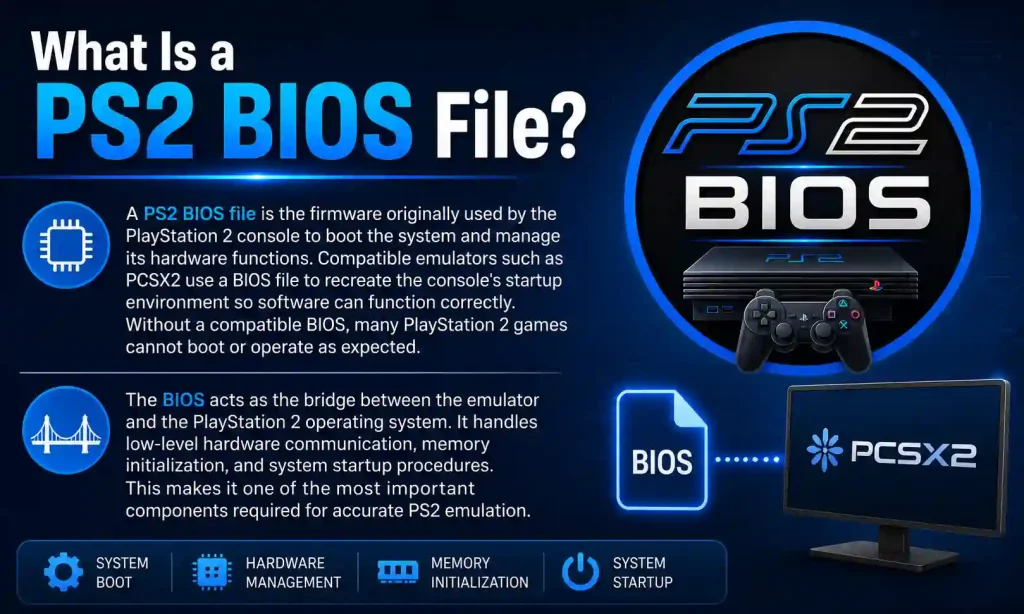
A PS2 BIOS file is the original firmware that helps a PlayStation 2 start up and control its core hardware functions. Emulators like PCSX2 rely on a compatible BIOS to recreate the console environment and run games properly. Just as apps such as GB WhatsApp, WhatsApp Plus, MB WhatsApp, and FM WhatsApp depend on the right system environment to work smoothly, PS2 emulation also requires the correct BIOS for proper game compatibility.
The BIOS works as an important connection between the emulator and the original PlayStation 2 system. It manages essential startup processes, memory initialization, and low-level hardware communication, making it a key component for accurate and stable PS2 emulation.
Why Is a PS2 BIOS File Important?
A PlayStation 2 emulator alone cannot fully reproduce the original console’s firmware. The BIOS provides essential system functions that allow games to communicate properly with the emulated hardware. Proper BIOS configuration also improves compatibility with many PlayStation 2 titles.
Without a compatible BIOS, users may encounter startup errors, missing menus, or games that fail to load. Using the correct BIOS version helps emulators perform more accurately. Better compatibility often results in smoother gameplay and fewer technical issues.
Quick Overview
- Required for PS2 emulators
- Supports PlayStation 2 game compatibility
- Initializes console firmware
- Improves emulator accuracy
- Supports multiple BIOS regions
- Works with popular PS2 emulators
- Easy configuration process
- Essential for system startup
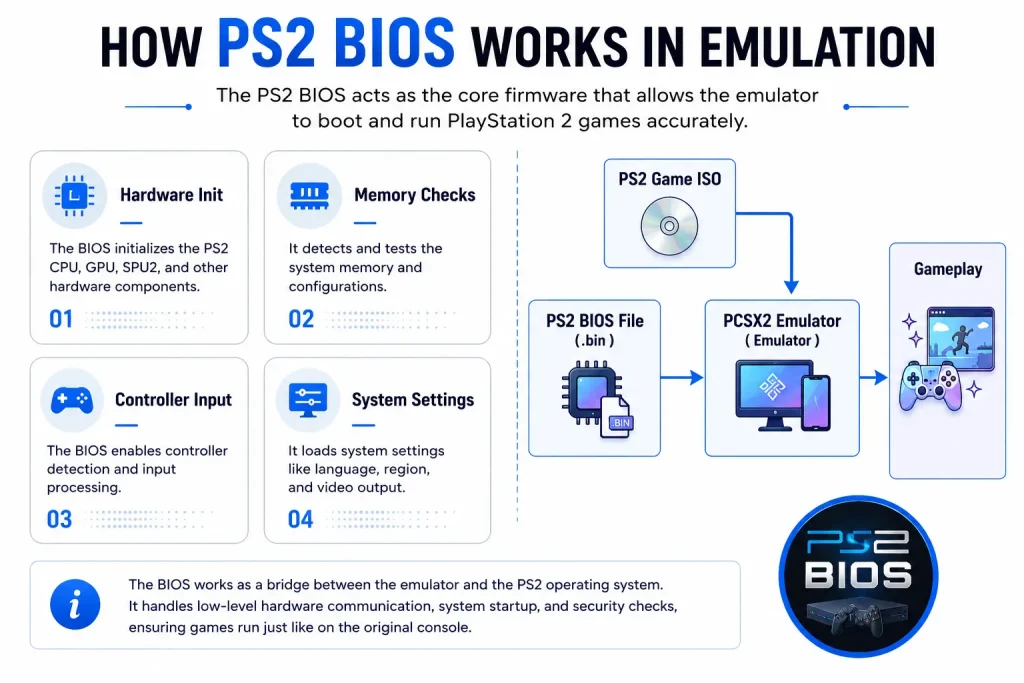
Info Box: Why the PS2 BIOS File Matters
Console Firmware • Emulator Compatibility • System Boot Support • Hardware Initialization • Region Compatibility • Better Accuracy • Stable Performance • Improved Gaming Experience
The BIOS is a core component of PlayStation 2 emulation because it provides the firmware environment expected by compatible games and software. Proper configuration helps the emulator behave more like the original console.
GB WhatsApp is known for its advanced messaging features, allowing users to customize their chats and enjoy greater control over privacy. Many users search for GB WhatsApp Chat Lock to secure personal conversations, while Portuguese users often look for bloqueio de conversas GB WhatsApp to protect their private chats.
Key Features of a PS2 BIOS File
The PS2 BIOS includes several important functions that help emulators recreate the PlayStation 2 experience. Each feature contributes to compatibility, system stability, and accurate hardware behavior.
Console Boot Support
The BIOS controls the PlayStation 2 startup sequence before games begin loading. It initializes important system hardware and prepares the operating environment. This process allows compatible emulators to simulate the original console more accurately.
Hardware Initialization
Before a PlayStation 2 game begins running, the BIOS prepares the console’s hardware components. This includes memory management, processor initialization, and peripheral communication. Accurate initialization improves compatibility with supported titles.
Region Compatibility
PlayStation 2 BIOS files were produced for different regions, including North America, Europe, and Japan. Using the correct region may improve compatibility with software designed for that market. Many emulators allow users to select the appropriate BIOS during configuration.
Emulator Integration
Modern PlayStation 2 emulators are designed to recognize compatible BIOS files during setup. Once configured correctly, the emulator can initialize the firmware before launching supported games. This simplifies the configuration process for most users.
Stable System Operation
The BIOS helps maintain communication between the emulator and the virtual PlayStation 2 hardware. Stable firmware operation contributes to smoother loading and better compatibility. Reliable initialization improves the overall emulation experience.
Multi-Version Support
Different PlayStation 2 console revisions were released throughout the system’s lifetime. Compatible emulators can often work with multiple BIOS revisions depending on user requirements. This flexibility improves support across different game libraries.
Lightweight Firmware
The BIOS file itself is relatively small compared to PlayStation 2 game files. It loads quickly during emulator startup without requiring significant storage space. Small file sizes simplify configuration and organization.
Easy Configuration
Most PlayStation 2 emulators provide straightforward BIOS configuration menus. Users simply select the appropriate BIOS location during setup. Clear configuration options simplify the installation process.
Benefits of Using a Properly Configured PS2 BIOS
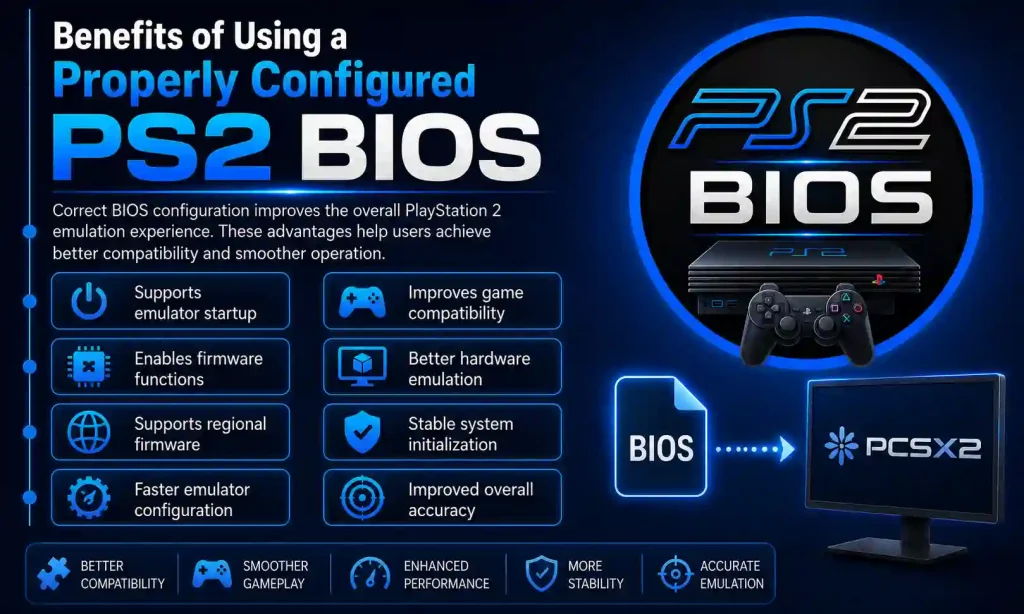
Correct BIOS configuration improves the overall PlayStation 2 emulation experience. These advantages help users achieve better compatibility and smoother operation.
- Supports emulator startup
- Improves game compatibility
- Enables firmware functions
- Better hardware emulation
- Supports regional firmware
- Stable system initialization
- Faster emulator configuration
- Improved overall accuracy
These benefits make the BIOS an essential part of successful PlayStation 2 emulation. Proper configuration also reduces common startup problems. Better compatibility leads to a more enjoyable gaming experience.
BIOS Information Table
| Information | Details |
|---|---|
| File Name | PS2 BIOS File |
| Platform | PlayStation 2 |
| Purpose | Emulator Firmware |
| Compatible Emulators | PCSX2, AetherSX2 and other compatible PS2 emulators |
| Supported Regions | USA, Europe, Japan, Asia |
| File Type | BIOS Firmware |
| Operating Systems | Windows, Linux, macOS, Android (depending on emulator) |
| Configuration | Manual or Automatic Detection |
Why the PS2 BIOS Is Essential
Every PlayStation 2 console relies on its BIOS to initialize hardware before software begins running. Emulators recreate the console environment, but they still require compatible firmware to perform these startup functions. This makes the BIOS one of the most important components in the entire emulation process.
Accurate firmware behavior also improves compatibility with a wide range of PlayStation 2 games. Better initialization leads to fewer startup issues and more consistent performance. Proper BIOS configuration remains an important step when setting up a PlayStation 2 emulator.
Who Uses a PS2 BIOS File?
A PS2 BIOS file is primarily used by people running PlayStation 2 emulators on desktop computers, laptops, handheld gaming devices, or Android devices that support compatible emulation software. It allows the emulator to recreate the console firmware required during system startup. Both casual players and experienced emulator users depend on BIOS configuration for reliable operation.
Many users also utilize different BIOS regions when testing software compatibility across multiple game releases. Emulator developers frequently recommend using properly configured firmware for the best results. Correct BIOS setup contributes to a smoother and more accurate PlayStation 2 experience.
System Requirements
Before configuring a PS2 BIOS file, make sure your device meets the minimum requirements for your chosen emulator. Modern systems generally handle PlayStation 2 emulation comfortably, but better hardware can improve compatibility and overall performance. Keeping your operating system updated also helps ensure smoother emulator functionality.
| Requirement | Minimum Specification |
|---|---|
| Operating System | Windows 10/11, Linux, macOS, or Android |
| Processor | Dual-Core 2.5 GHz or Higher |
| RAM | 4 GB Minimum |
| Graphics | DirectX 11 / OpenGL Compatible GPU |
| Storage | 2 GB Free Space |
| Emulator | PCSX2, AetherSX2, or Other Compatible Emulator |
Higher-end hardware usually provides better frame rates and improved game compatibility. Dedicated graphics cards can further enhance performance for demanding PlayStation 2 titles. Sufficient storage also helps manage save files and emulator settings efficiently.
“““““““““““““““““““““““Compatible PS2 Emulators“““““““““““““““““““““““““
Several PlayStation 2 emulators support BIOS configuration across different operating systems. Each emulator offers unique features while relying on the BIOS for system initialization. Choosing the right emulator depends on your device and personal preferences.
PCSX2
PCSX2 is one of the most widely used PlayStation 2 emulators for Windows, Linux, and macOS. It supports high-resolution rendering, controller customization, save states, and extensive compatibility with PlayStation 2 games. Regular updates continue improving performance and stability.
AetherSX2
AetherSX2 is designed primarily for Android devices that support PlayStation 2 emulation. It includes touchscreen controls, controller support, and performance optimization for compatible smartphones and tablets. Proper BIOS configuration is required before using the emulator.
Other Compatible Emulators
Some additional emulators also support PlayStation 2 BIOS configuration depending on the platform. Available features may differ between applications and operating systems. Always verify compatibility before configuring your emulator.
PS2 BIOS Regions Explained
PlayStation 2 consoles were released in multiple regions worldwide. Each console included firmware designed specifically for its intended market. Understanding BIOS regions helps users configure compatible emulator settings.
| Region | Common Use |
|---|---|
| USA | North American PlayStation 2 Consoles |
| Europe | PAL Region Consoles |
| Japan | Japanese PlayStation 2 Systems |
| Asia | Selected Asian Markets |
Region selection mainly affects software compatibility and language settings. Matching the BIOS region with compatible software often improves overall results. Proper configuration contributes to a smoother emulation experience.
PS2 BIOS Versions
Sony released multiple PlayStation 2 hardware revisions throughout the console’s lifecycle. Different BIOS versions correspond to these console revisions and firmware updates. Many emulators support a variety of BIOS versions.
Newer BIOS revisions often include firmware improvements and compatibility adjustments. Older versions remain useful for testing specific software behavior. Emulator users generally choose the BIOS that best matches their intended setup.
How to Configure a PS2 BIOS File
Configuring a PS2 BIOS file is one of the first steps after installing a compatible emulator. Most modern emulators include a setup wizard that simplifies the process. Correct configuration helps ensure the emulator starts properly.
Step 1: Install the Emulator
Download and install a PlayStation 2 emulator compatible with your operating system. Complete the installation using the default settings unless customization is required. Launch the emulator after installation finishes.
Step 2: Open Emulator Settings
Navigate to the emulator’s configuration or settings menu. Locate the BIOS configuration section provided during setup. Most emulators clearly label this option.
Step 3: Select the BIOS Folder
Browse to the folder containing your compatible BIOS file. Allow the emulator to scan the directory for supported firmware. Available BIOS versions should appear after scanning.
Step 4: Choose a BIOS Version
Select the BIOS version you want to use for emulation. Confirm the configuration before saving the settings. Restart the emulator if necessary.
How to Verify BIOS Detection
After configuration, verify that the emulator successfully recognizes the BIOS. Most emulators display detected BIOS versions inside the settings menu. Successful detection indicates that configuration was completed correctly.
If no BIOS appears, review the selected folder location and supported file format. Incorrect folder paths are among the most common configuration issues. Double-checking the setup usually resolves detection problems.
Understanding the Emulator Interface
Most PlayStation 2 emulators share a similar interface regardless of the operating system. Learning the basic layout makes configuration easier for beginners. Organized menus simplify future adjustments.
Main Dashboard
The dashboard provides access to installed games, settings, and emulator tools. Important options remain accessible through clearly labeled menus. Simple navigation improves usability.
BIOS Configuration Menu
This section allows users to manage BIOS settings and firmware selection. Available BIOS versions appear after successful detection. Users can change BIOS preferences whenever necessary.
Graphics Settings
Graphics options control rendering quality, resolution, and visual enhancements. Adjusting these settings helps optimize performance for different hardware configurations. Careful adjustments improve gameplay.
Controller Settings
Most emulators support both keyboard and external controllers. Users can customize button layouts according to personal preference. Flexible controls improve the gaming experience.
Best Practices for BIOS Configuration
Following recommended configuration practices improves compatibility and system stability. Proper setup also reduces common startup errors encountered by new users. Small adjustments often produce better long-term results.
- Keep the emulator updated.
- Verify BIOS compatibility.
- Organize firmware files in one folder.
- Maintain updated graphics drivers.
- Save emulator settings after configuration.
- Restart the emulator after changes.
- Use supported controller drivers.
- Monitor system performance during gameplay.
These recommendations help maintain stable emulator performance over time. Proper organization also simplifies future updates and configuration changes. Consistent maintenance improves reliability.
Info Box: Emulator Setup Workflow
Install Emulator → Configure BIOS → Verify Detection → Adjust Graphics → Configure Controller → Save Settings → Launch Compatible Softwa..re
Following this workflow helps users complete the setup process efficiently. Organized configuration reduces the likelihood of startup issues. Careful preparation contributes to smoother operation.
Tips for Better Performance
Optimizing emulator settings helps improve responsiveness and game compatibility. Hardware capabilities play an important role in overall performance. Small changes often provide noticeable improvements.
Close unnecessary background applications before launching the emulator. Keep graphics drivers updated for better rendering performance. Regularly updating the emulator also improves compatibility with newer hardware.
Why Proper Configuration Matters
Accurate BIOS configuration allows the emulator to initialize PlayStation 2 firmware correctly before launching software. Incorrect settings may result in startup errors or reduced compatibility. Spending a few minutes verifying configuration helps avoid future problems.
Well-configured emulators also provide a smoother overall gaming experience. Better initialization contributes to stable performance throughout gameplay. Reliable setup is essential for successful PlayStation 2 emulation.
Common BIOS Errors and Their Solutions
Even with a properly installed emulator, users may occasionally encounter BIOS-related issues. Most problems are caused by incorrect configuration, incompatible settings, or missing firmware files. Understanding these common errors makes troubleshooting much easier.
BIOS Not Detected
If the emulator cannot detect the BIOS, verify that the firmware is located in the correct directory. Open the BIOS configuration menu and rescan the selected folder. Incorrect file locations are one of the most common setup issues.
Emulator Won’t Boot
An emulator that fails to start may have incorrect BIOS settings or corrupted configuration files. Reset the emulator configuration and repeat the BIOS setup process. Restarting the application often resolves temporary startup problems.
Black Screen During Startup
A black screen usually indicates a configuration issue rather than a hardware failure. Verify that the selected BIOS matches the emulator’s supported format and check your graphics settings. Updating the emulator may also improve compatibility.
Slow Performance
Performance issues can result from limited hardware resources or demanding graphics settings. Lowering the rendering resolution and closing unnecessary background applications often improves frame rates. Hardware upgrades may provide additional performance improvements.
Controller Not Responding
If your controller does not work correctly, reopen the controller configuration menu and verify the button mapping. Updating controller drivers may also resolve connection problems. Saving the configuration ensures the settings remain active.
Troubleshooting Table
| Problem | Possible Solution |
|---|---|
| BIOS Not Found | Verify BIOS folder location |
| Black Screen | Check graphics and BIOS settings |
| Emulator Crashes | Update emulator and graphics drivers |
| Slow Gameplay | Lower graphics settings |
| Controller Issues | Reconfigure controller mapping |
| Audio Problems | Adjust sound settings |
| Game Freezes | Verify compatibility settings |
| Startup Errors | Repeat BIOS configuration |
Most configuration issues can be solved by reviewing emulator settings carefully. Regular software updates also reduce compatibility problems. Proper troubleshooting saves time during setup.
Performance Optimization Tips
Optimizing emulator settings helps achieve smoother gameplay across different hardware configurations. Small adjustments often improve stability without significantly affecting visual quality. Better optimization creates a more enjoyable gaming experience.
Update Your Emulator
Developers regularly release updates that improve performance, compatibility, and system stability. Installing the latest version helps resolve known issues. Updated software generally provides better overall results.
Keep Graphics Drivers Updated
Graphics drivers play an important role in emulator performance. Updated drivers improve rendering efficiency and hardware compatibility. Regular updates also reduce graphical glitches.
Close Background Applications
Running many applications simultaneously consumes valuable system resources. Closing unnecessary programs frees memory and processor capacity for the emulator. Better resource allocation improves responsiveness.
Choose Appropriate Graphics Settings
Higher resolutions require more powerful hardware. Selecting settings that match your computer’s capabilities helps maintain stable frame rates. Balanced settings usually provide the best experience.
Maintain Sufficient Storage
Available storage space affects save files, emulator settings, and temporary data. Keeping free disk space improves overall system responsiveness. Regular storage maintenance benefits long-term performance.
Best Practices for Smooth Emulation
Successful PlayStation 2 emulation depends on both proper configuration and regular system maintenance. Following recommended practices helps improve compatibility and stability over time. Small habits often produce significant improvements.
- Keep your operating system updated.
- Use the latest emulator version.
- Maintain updated graphics drivers.
- Organize emulator files carefully.
- Back up important save files.
- Configure controller settings correctly.
- Monitor hardware temperatures.
- Restart your system occasionally.
These recommendations help maintain consistent emulator performance. Good organization also simplifies future updates and troubleshooting. Reliable maintenance improves long-term usability.
PS2 BIOS File vs Emulator Software
Many beginners confuse the BIOS with the emulator itself. Although both are required for PlayStation 2 emulation, they perform completely different functions. Understanding this distinction simplifies the setup process.
| PS2 BIOS File | Emulator |
|---|---|
| Console firmware | Software application |
| Initializes PlayStation 2 hardware | Simulates PlayStation 2 console |
| Required for startup | Required for running games |
| Region-specific versions | Platform-specific versions |
| Provides low-level system functions | Provides graphics, audio, and controls |
| Loaded during emulator setup | Installed on the operating system |
The emulator recreates the PlayStation 2 hardware environment, while the BIOS provides the firmware expected by that environment. Together, they enable accurate PlayStation 2 emulation. Both components are essential for successful operation.
Why Emulator Updates Are Important
Modern PlayStation 2 emulators continue improving through frequent software updates. Developers regularly optimize compatibility, graphics rendering, controller support, and performance. Installing updates helps users benefit from these improvements.
New versions may also resolve previously reported bugs and improve support for newer operating systems. Better optimization contributes to smoother gameplay and fewer technical issues. Staying updated is always recommended.
Info Box: Performance Checklist
✔ Keep Emulator Updated
✔ Verify BIOS Configuration
✔ Update Graphics Drivers
✔ Close Background Applications
✔ Configure Controller Settings
✔ Maintain Free Storage Space
Following this checklist helps improve emulator stability and overall responsiveness. Good preparation minimizes common performance issues. Consistent maintenance contributes to a better gaming experience.
Frequently Asked Questions
What does a PS2 BIOS file do?
A PS2 BIOS file provides the firmware required for compatible PlayStation 2 emulators to initialize the virtual console environment before software starts.
Is a BIOS required for PlayStation 2 emulation?
Most PlayStation 2 emulators require compatible BIOS firmware to accurately reproduce the console’s startup process.
Which operating systems support PS2 emulators?
Popular PlayStation 2 emulators support Windows, Linux, macOS, and Android depending on the emulator version.
Can I use different BIOS regions?
Many emulators support multiple BIOS regions, allowing users to configure the firmware appropriate for their setup.
Why is my BIOS not detected?
Incorrect folder locations, unsupported file formats, or incomplete configuration are the most common causes of BIOS detection issues.
Does updating the emulator improve compatibility?
Yes. Emulator updates often include performance improvements, bug fixes, and expanded compatibility with supported software.
Why is my emulator running slowly?
Performance depends on hardware specifications, graphics settings, and available system resources. Optimizing these settings usually improves responsiveness.
Can I change BIOS settings later?
Yes. Most emulators allow users to modify BIOS configuration through the settings menu whenever necessary.
Does the BIOS affect graphics quality?
Graphics quality is primarily controlled by the emulator settings and hardware capabilities rather than the BIOS itself.
Is regular maintenance important?
Yes. Updating software, organizing files, and maintaining your system all contribute to a smoother PlayStation 2 emulation experience.